
The Competitive Companion Marvel Rivals Didn't Ship With
Built a playstyle-driven hero recommendation engine — turning "who should I main?" into an instant, personalized answer backed by a scalable intelligence layer.
The Problem
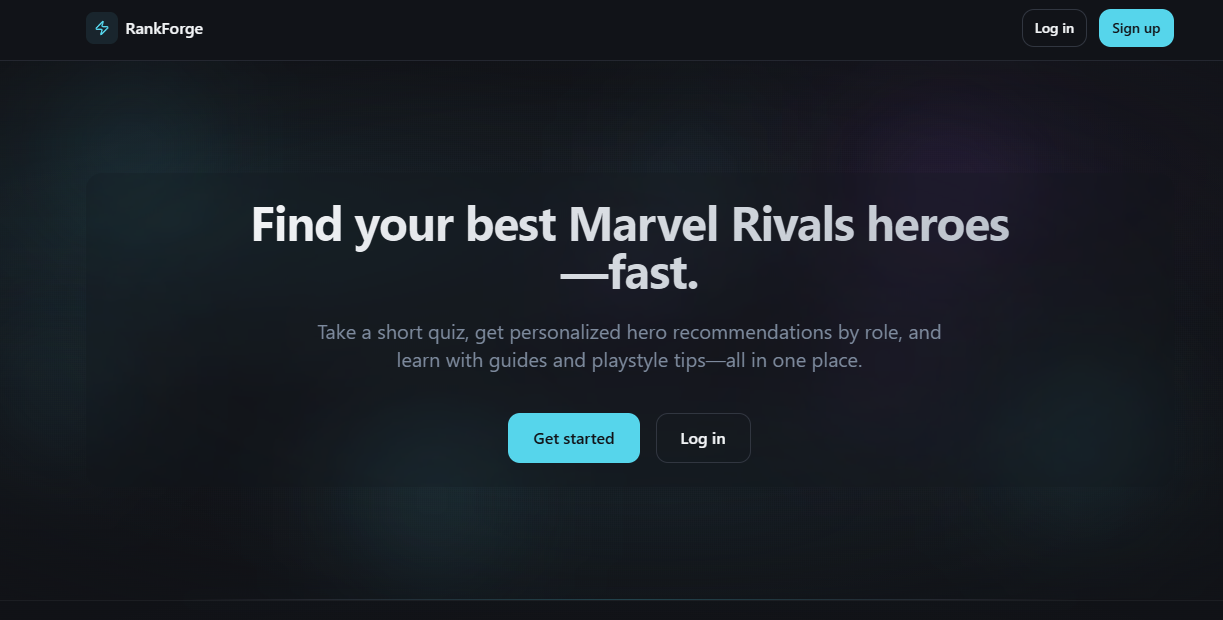
Marvel Rivals launched without an established meta, without trusted third-party tools, and without any structured path for players trying to improve. Competitive players were left doing what they always do in a vacuum: guessing.
The core friction wasn't mechanical skill — it was decision clarity. Players couldn't identify a hero that fit their playstyle, didn't understand how roles mapped to team compositions, and had no structured feedback loop to validate their choices. The result was inconsistent performance and slow progression.
The problem isn't that players lack skill. It's that they have no system for making the right decisions before they even queue. RankForge was built to be that system.
There was a gap between player intent — how I like to play — and in-game execution — who I should actually play. No tool existed to bridge it. That was the opportunity.
The Approach
I led RankForge as sole product manager and owner, responsible for product strategy, system architecture, and end-to-end build. The core philosophy: deliver immediate, high-perceived-value output without requiring a large dataset upfront. A quiz-driven recommendation engine was the right entry point — it works on day one, and it generates the behavioral data that powers everything next.
The recommendation engine was built around four axes: positioning preference (frontline, backline, flexible), engagement style (poke, dive, brawl), mechanical complexity (aim-heavy, mobility-driven, ability control), and role preference. Each axis maps to a structured output — a primary main recommendation plus supporting heroes across Vanguard, Duelist, and Strategist. Players get instant clarity on who to play and a coherent rationale for why.
The hero intelligence layer underneath the quiz was designed to scale, not just function. Every hero in the system is classified by role, sub-role, playstyle tags, and skill expression (mechanical vs strategic). This structure makes recommendations explainable, not just accurate — and means new hero releases can be absorbed without rebuilding the system.
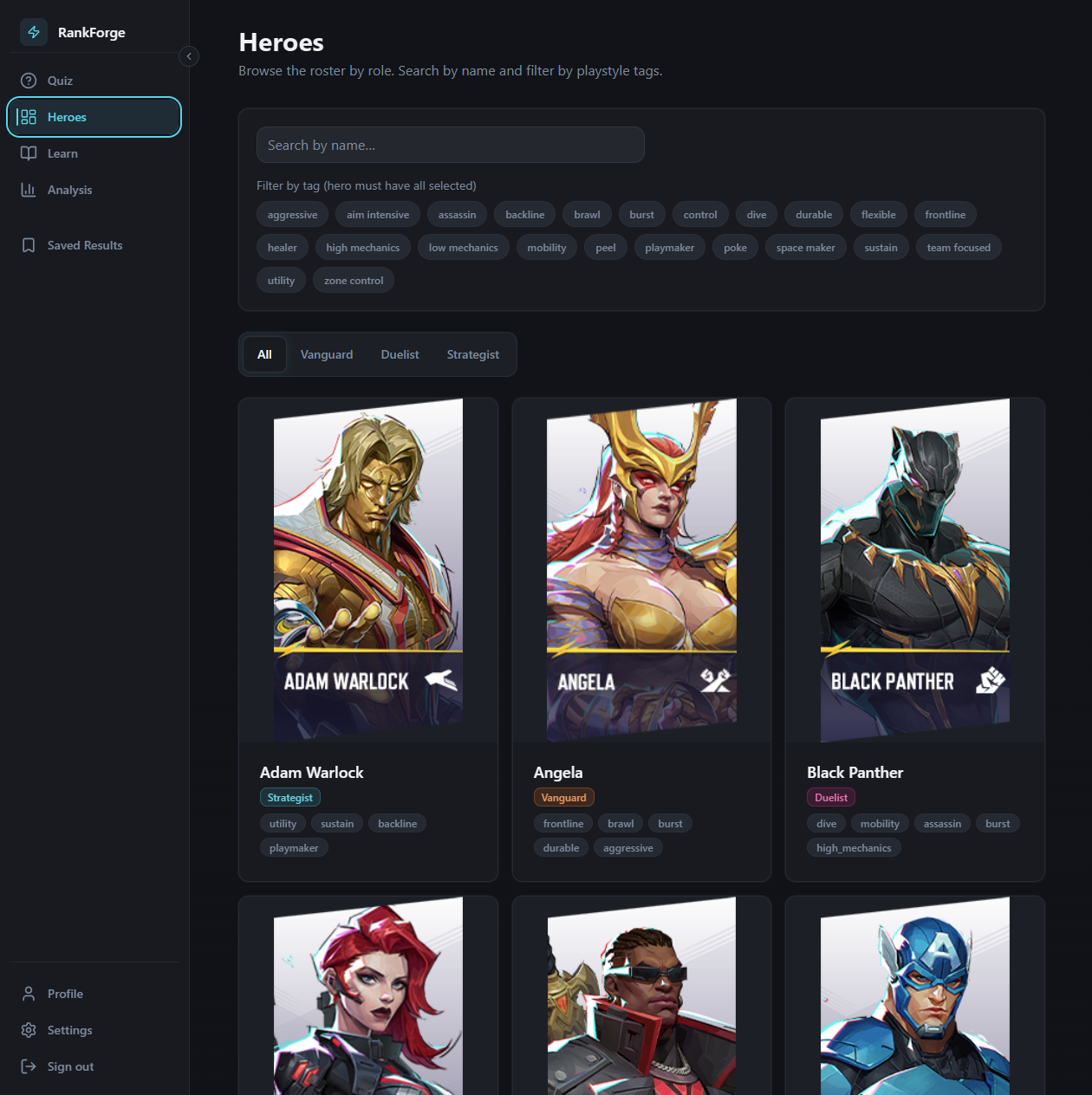
Building for explainability from day one matters. If a player doesn't understand why they were recommended a hero, they won't trust it — and trust is the product.
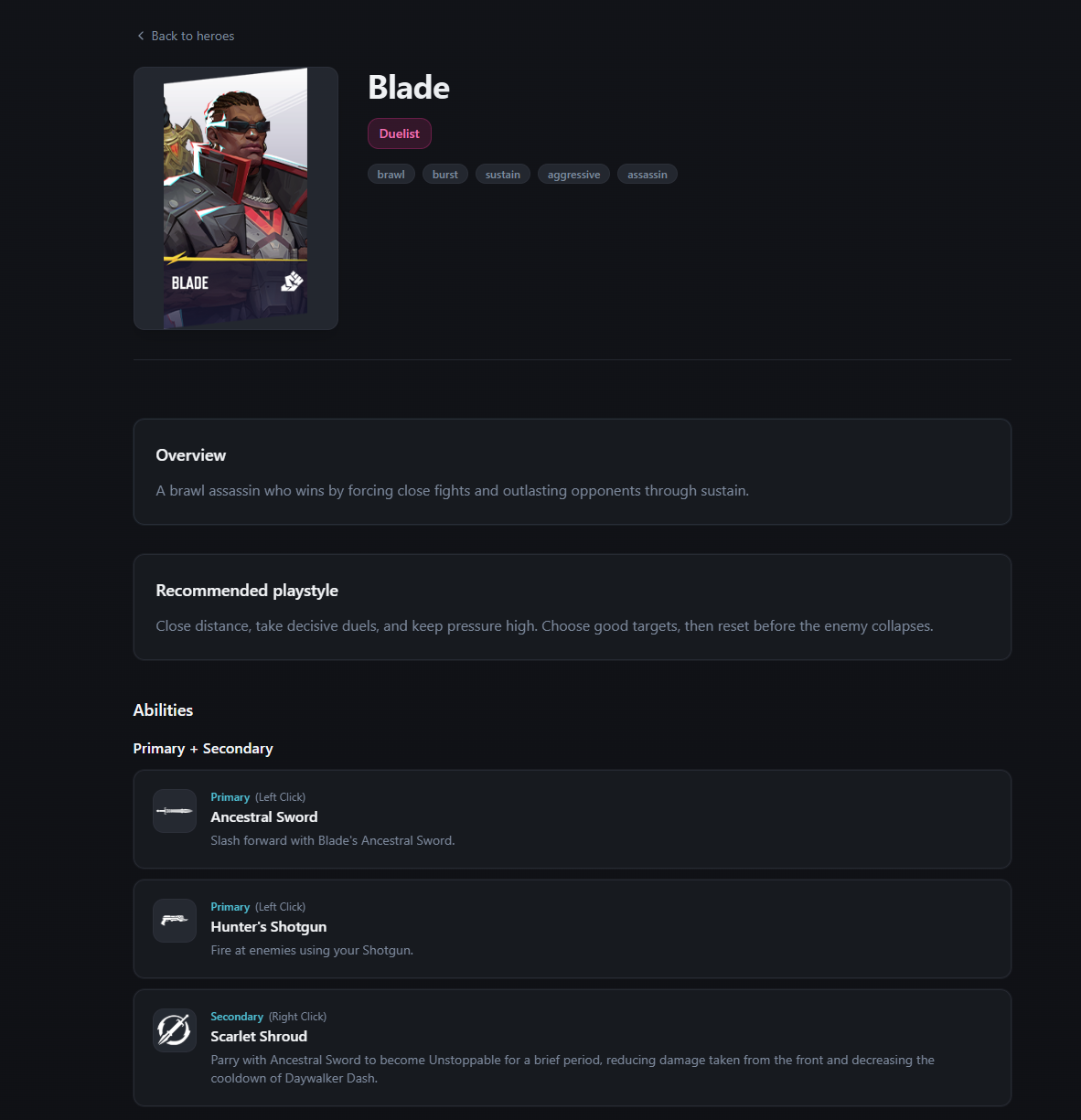
Each hero has a dedicated detail view surfacing their role, playstyle profile, mechanical complexity, and fit rationale — so recommendations don't just tell players who to play, they show them why.
User accounts were prioritized early — not as a late-stage feature, but as a core retention mechanism. Full authentication via Supabase Auth (including Google OAuth) lets users save quiz results, maintain hero preferences, and build a persistent player profile. This transforms RankForge from a one-time utility into a repeat-use product with growing user context over time.
The backend architecture (Supabase Postgres) was structured from the start to support what comes next — match history ingestion, performance tracking, and AI-driven coaching insights. The data model anticipates the analytics layer rather than bolting it on after the fact. That's not premature optimization; it's designing for the product you're building, not just the MVP you're shipping.
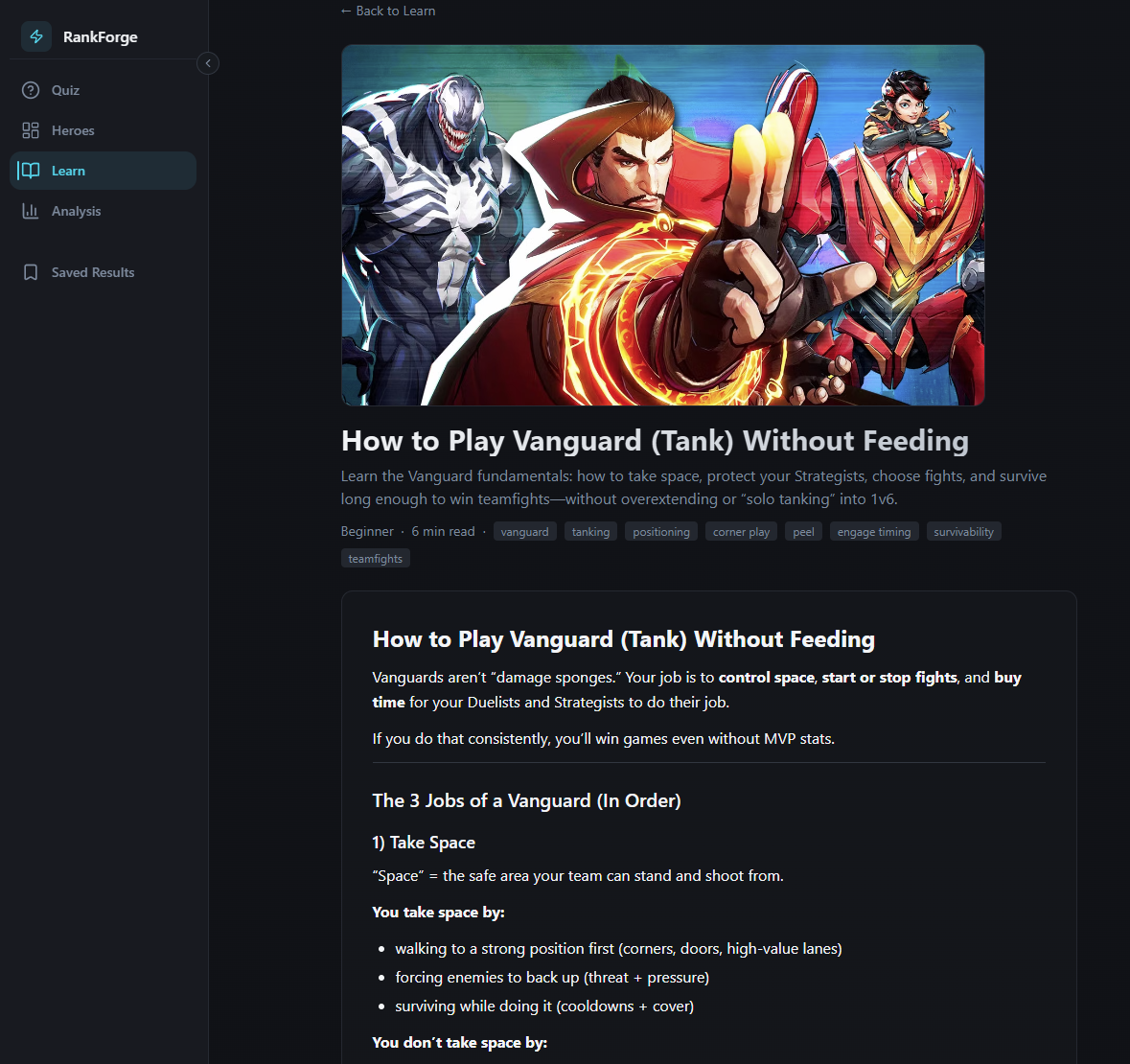
UX decisions were made in service of one constraint: players use this between matches. Speed, clarity, and low friction were non-negotiable. The quiz-to-results flow is immediate. The UI is clean and focused. Logged-in and logged-out experiences both work — but the account system creates a meaningful pull toward returning.
The Results
RankForge shipped as a live, authenticated MVP — a working product with real users, not a prototype. Early signal validated the core thesis: players return to refine their hero pools, and recommendation accuracy is high enough to build trust quickly.
- Live MVP with returning authenticated users. Full-stack product shipped end-to-end — quiz engine, hero intelligence, user accounts, and persistent profiles. Users are returning to refine and validate recommendations, not just using it once.
- High perceived accuracy in recommendations. Users reported recommendations closely matching their existing mains or helping them identify better-fitting heroes — validating the playstyle mapping system without requiring historical match data.
- Scalable hero classification system. Every hero structured by role, sub-role, playstyle tags, and skill expression — enabling consistent, explainable recommendations and clean expansion as the Marvel Rivals roster grows.
- Retention infrastructure built in from day one. Supabase Auth with Google OAuth live at launch. Saved profiles and preferences convert one-time users into a returning base with growing behavioral context.
- AI-ready data architecture. Backend designed to support match history ingestion, performance dashboards, and AI-generated coaching insights — the analytics layer is a natural next step, not a rebuild.
Building something similar?
Get a free 20-minute strategy call and we can talk through what is in the way.
Get a free 20-minute strategy call →